Construction
Pre-Hurricane Drone Documentation: Protect Your Insurance Claim
Pre-hurricane drone documentation dates your roof before the storm, so you can prove new damage to your insurer. Here is how it works in Florida.
Pre-hurricane drone documentation is a dated set of aerial images of your roof and property, taken before the storm, so that after it you can show an insurer what is new damage and what was already there. Without that record, the argument comes down to memory and goodwill. With it, the before and after speak for themselves.
Not legal advice
This article is informational and educational. It does not constitute legal advice and does not replace consultation with an attorney, a certified remote pilot, or the FAA. Regulations can change — always verify current rules with the official source before acting.
Key takeaways
- A baseline flight records a roof and property in a known condition on a specific date.
- After a storm, the same angles show exactly what changed, which is what an adjuster needs to see.
- Fly before the season, not in the days before landfall, when everything is tight.
- A baseline is a recurring relationship, not an emergency call.
Why pre-hurricane drone documentation matters
Claim disputes are rarely about whether damage exists. They are about whether this storm caused it. Roofs wear. Tiles slip, sealant dries, flashing lifts. After a hurricane, a carrier can attribute old wear to age, and an owner has little to answer with if there is no proof of the roof’s condition the week before.
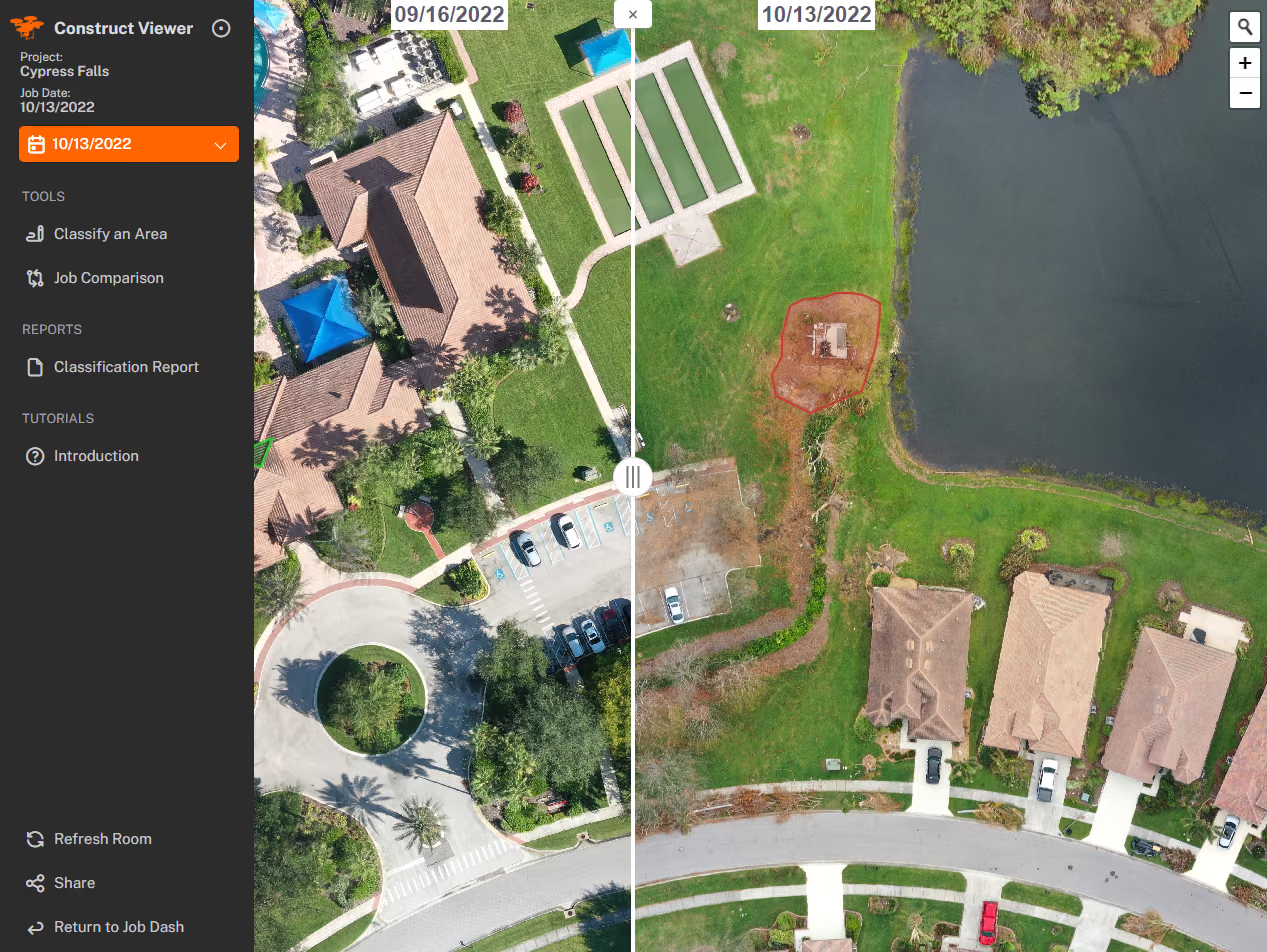
A dated flight changes the conversation. Each image carries a date and a location, so a cracked ridge tile in the after set can be matched to the same spot in the before set. If it was intact, the damage is new. If it was already cracked, you know that before you file, and you can repair it. Either way, you are working from evidence.
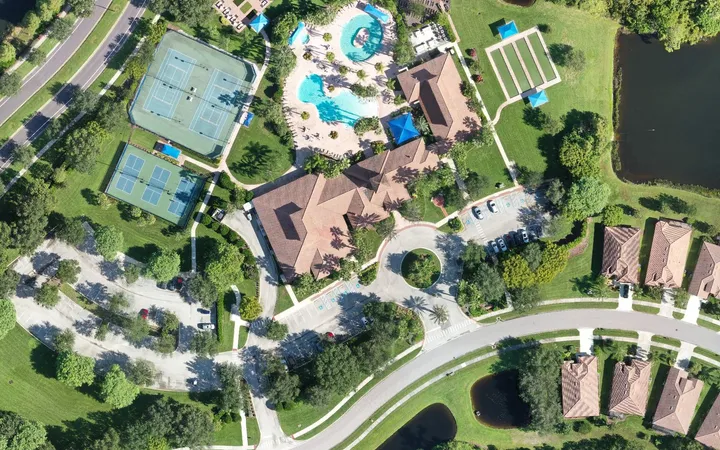
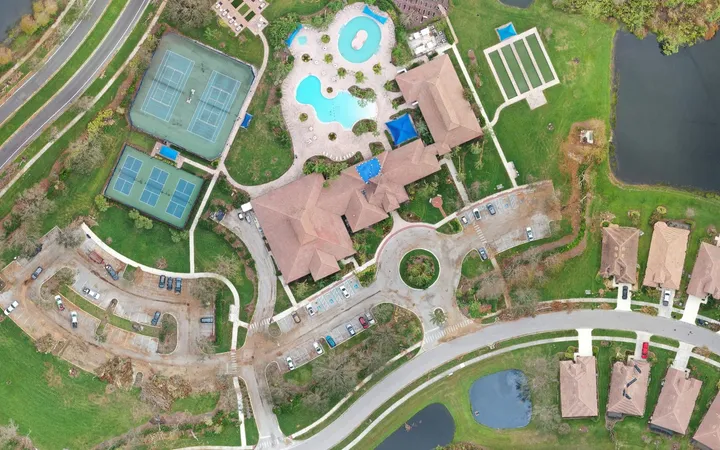
Drag the slider above. This community clubhouse in Southwest Florida was mapped 12 days before Hurricane Ian and again about two weeks after. The trees, the parking loop and the roofs all tell the same story, with a date on each side.
What a baseline records, and what the old way missed
| Question | Without a baseline | With a dated baseline |
|---|---|---|
| What did the roof look like? | Owner memory and a few phone photos | Every slope on a known date |
| Was this damage new? | Disputed | Compare the same spot, before and after |
| Old wear versus storm damage | The carrier decides | The record shows which is which |
| Large communities | Some buildings never get checked | Every building, every roof, one schedule |
| Time to assemble evidence | Scramble after the storm | Already on file |
What a good baseline captures
The point is coverage and consistency, not pretty pictures.
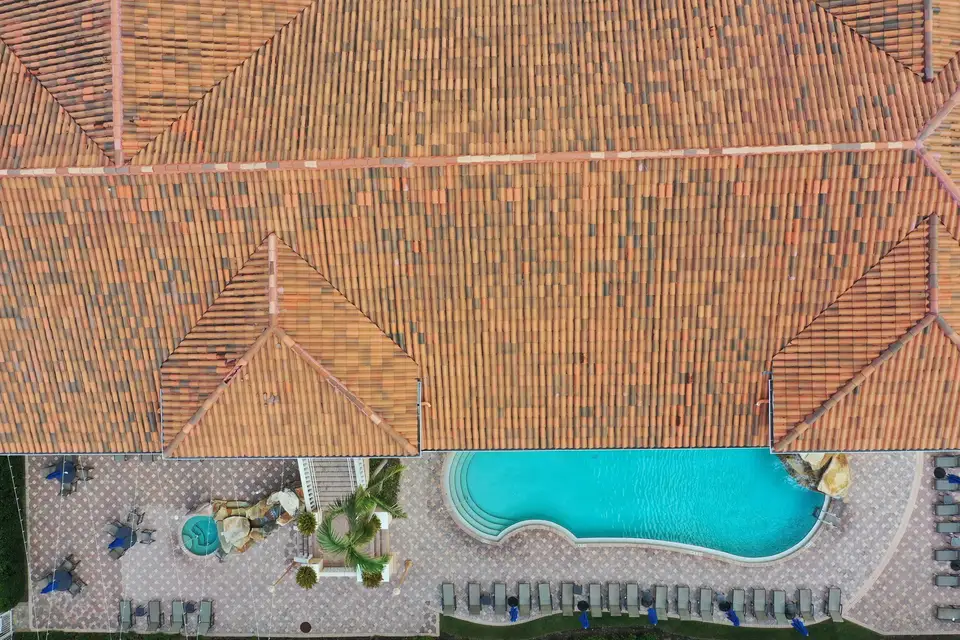
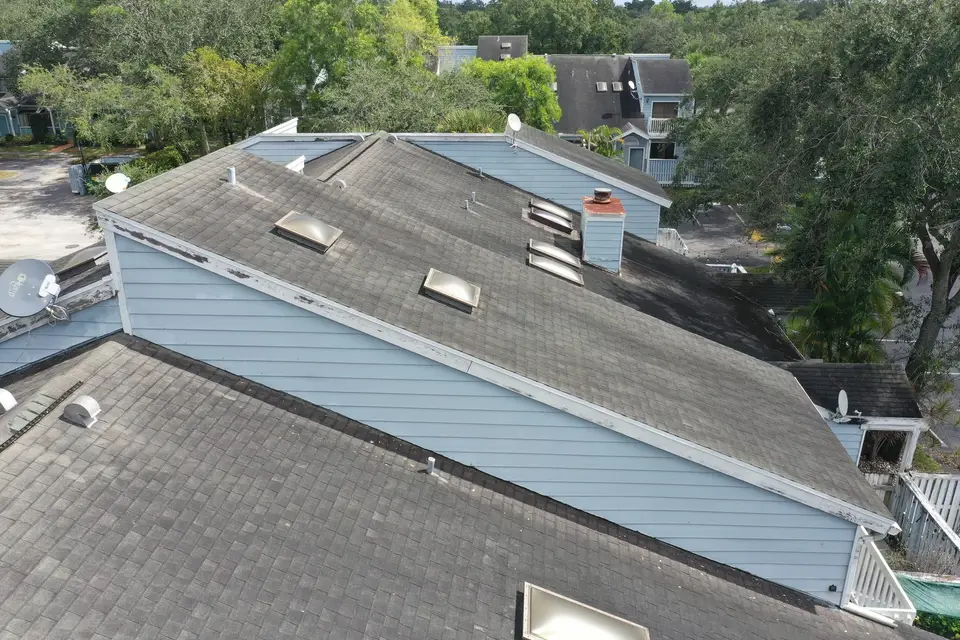
- Every roof slope and the edges, including valleys, penetrations, flashing and ridge lines, where storm damage tends to begin.
- The full property envelope, such as screen enclosures, fences, pool cages and trees near structures.
- Located, dated frames, so any shot can be tied to a spot and a day.
- Repeatable angles, so the after flight can match the before flight.
We fly exteriors only. The aerial view is what insurers and adjusters see most often anyway, and it reaches areas a person on a ladder would skip.
Who benefits most
HOAs and condo associations manage dozens of roofs, and a single storm touches all of them. A baseline set for every building gives the board a single source of truth when claims start. See HOA communities.
Commercial property owners have flat roofs, rooftop equipment and membranes that fail in ways that are hard to see from the ground. A condition record helps when a membrane tears or a unit is displaced.
Roofers, adjusters and insurers use a baseline to move faster on claims with fewer disputes. We work with these teams as a standing relationship before storms, not as a surge service after one. More on roofing and insurance work.
What storm damage looks like from above
The same flight method that records a healthy roof also documents the aftermath. After Hurricane Irma in 2017, we inspected 250 roofs in two weeks, and the pace came from not having to climb them. After Hurricane Ian in 2022, we mapped communities across Southwest Florida.
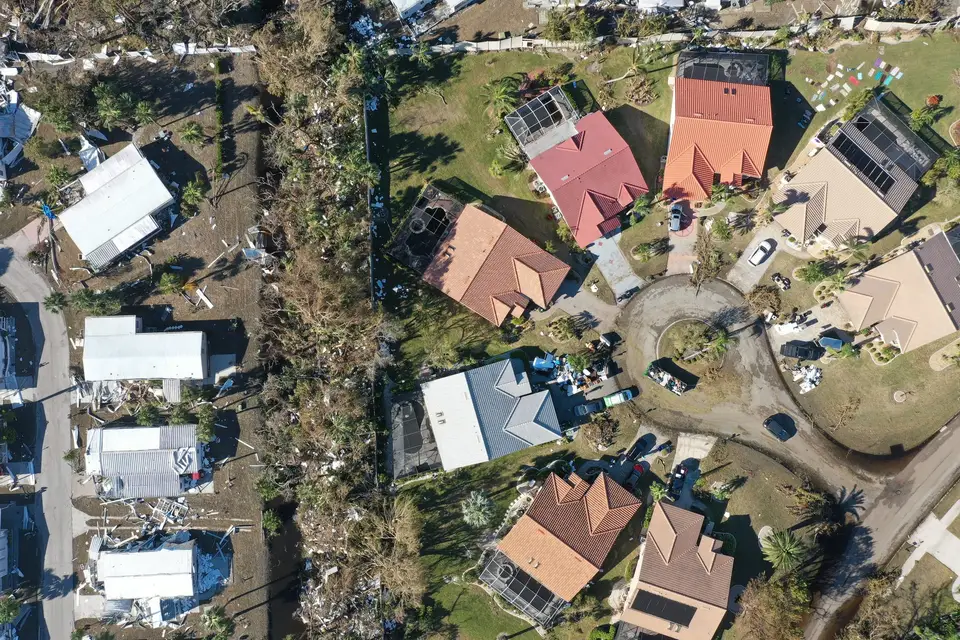
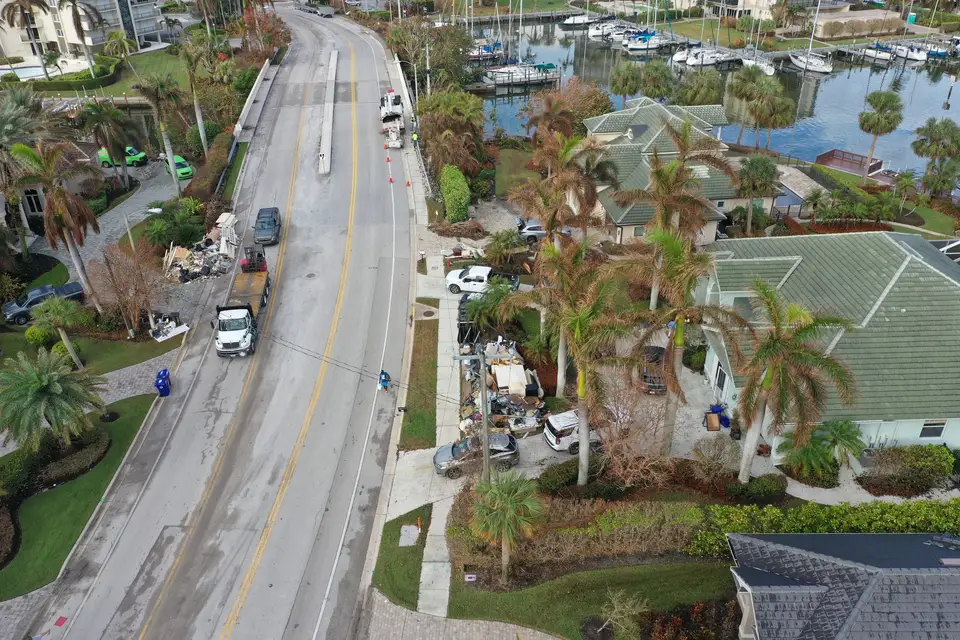
Before and after, on one screen.
Findings are delivered in the Inspection Viewer, so adjusters, contractors and owners can compare two dates side by side and see exactly what changed.
See the Inspection Viewer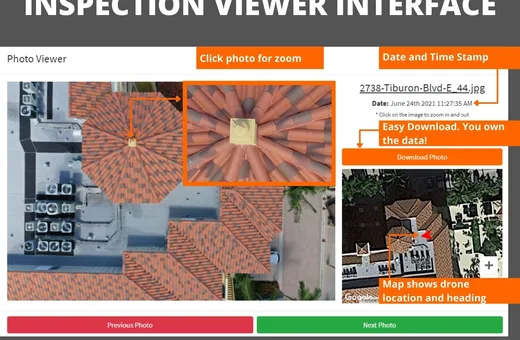
When should you fly the baseline?
Before the season, so the record exists whatever the forecast does. Once a named storm is a few days out, schedules fill, weather turns and airspace tightens. A baseline taken in spring is just as valid as one taken later, and it gets done without the rush.
After the storm, the follow-up flight happens at the earliest safe and permitted window. Airspace and sites are often restricted right after a major event, and a timely record carries more weight with an adjuster than a late one.
If you are unsure what a flight over your property involves, our airspace check shows whether controlled airspace applies, and our inspection service starts at $200. Related: how much a drone roof inspection costs.
When should the baseline flight happen?
How often should a baseline be updated?
Does my insurer accept drone documentation?
Can a drone fly right after a hurricane?
Does this replace an adjuster?
Date your roof before the season.
Request a baseline flight