Legality & Privacy
What Is FAA Remote ID? What It Broadcasts and Who Needs It
FAA Remote ID makes most drones broadcast an ID and live location. Learn what it sends, the three ways to comply, and what to ask a pilot you hire.
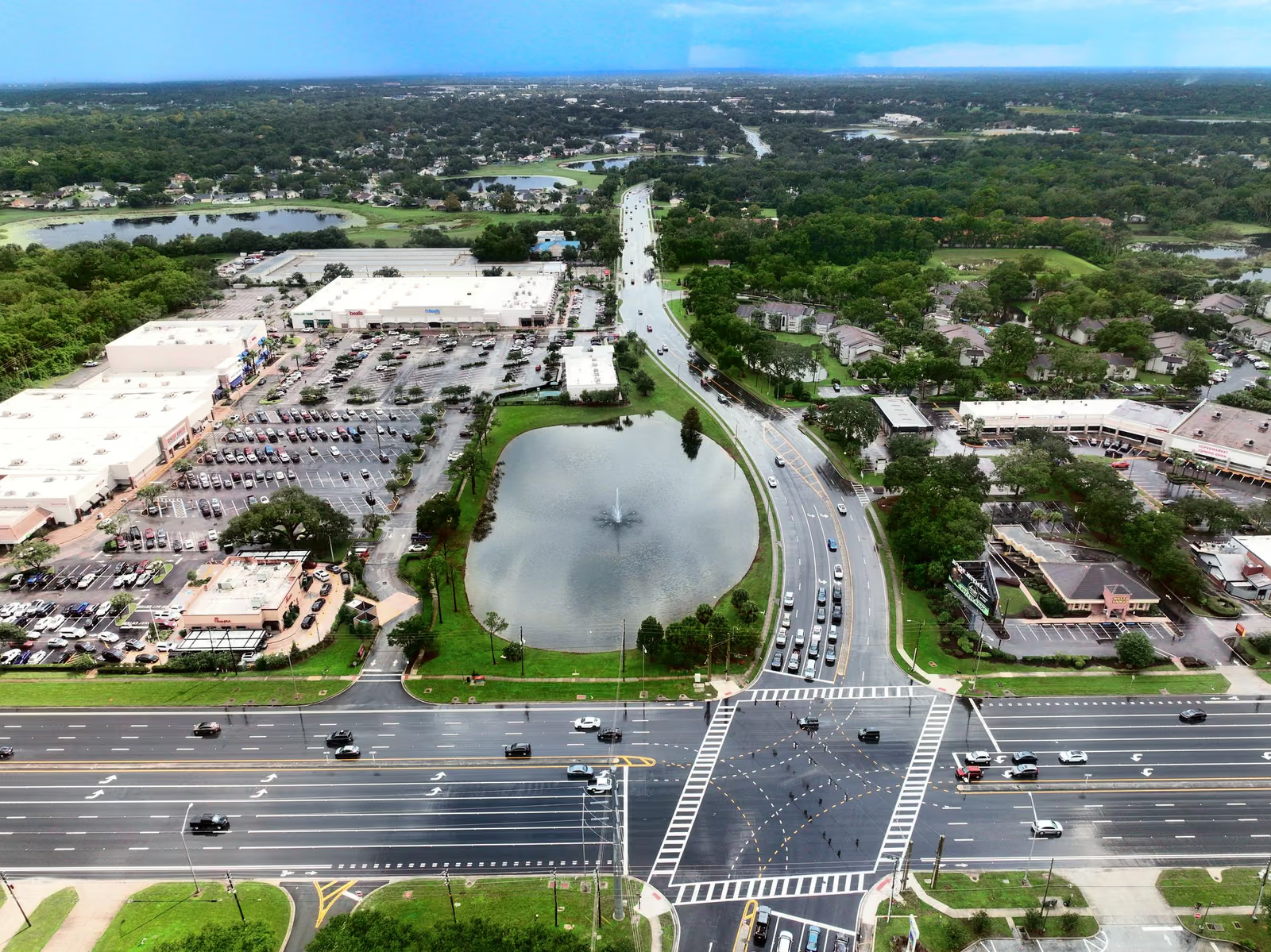
FAA Remote ID is the rule that makes most drones broadcast an identifier and their live location while they fly, so the aircraft over a roof or a job site is not anonymous. If you are asking what it is, the short version is a digital license plate in the air: it sends a few data points by radio, and it never sends video. Here is what it carries, the three ways a drone can comply, and what to ask before you hire a pilot.
Not legal advice
This article is informational and educational. It does not constitute legal advice and does not replace consultation with an attorney, a certified remote pilot, or the FAA. Regulations can change — always verify current rules with the official source before acting.
Key takeaways
- Remote ID is required under 14 CFR Part 89 and has been enforced since March 16, 2024.
- It broadcasts an ID, location, altitude, speed and control station position. It does not send video.
- There are three ways to comply: a standard Remote ID drone, a broadcast module, or a FRIA.
- Every Part 107 drone needs it, whatever the weight.
What does FAA Remote ID broadcast?
A compliant drone transmits a short message at least once per second, directly over Bluetooth or Wi-Fi. It does not need a cell connection or the internet, and any nearby device with the right app can receive it. The message contains:
- Identification: the drone’s serial number or a session ID that changes each flight.
- Position: the drone’s latitude, longitude and altitude.
- Velocity: how fast, and in which direction, it is moving.
- Control station location: where the pilot is, shown as latitude, longitude and altitude. Broadcast modules send the takeoff location instead.
- Time mark: when the message was generated.
- Emergency status: a flag the drone can raise, which applies to standard Remote ID drones.
That is the full list. No images, no audio, no pilot name. The purpose is accountability: if a drone is somewhere it should not be, the FAA and law enforcement can tie that aircraft to its registration.
What are the three ways to comply with Remote ID?
| Method | How it works | Best fit |
|---|---|---|
| Standard Remote ID drone | Remote ID is built in, and the manufacturer declares compliance to the FAA | Most current commercial and consumer drones |
| Broadcast module | An add-on transmitter attached to an older drone, with the pilot keeping the aircraft in visual line of sight | Older or custom aircraft |
| FRIA (FAA-Recognized Identification Area) | No broadcast needed, but the drone must stay inside the boundary and in visual line of sight | Clubs and schools that applied for a site |
A FRIA is a defined flying site approved on application by eligible organizations such as community groups and educational institutions. It is not a way for a commercial job at a client’s property to skip the requirement, so a paid roof inspection or progress flight is flown with a drone that broadcasts.
Which drones are required to have it?
The requirement follows registration. Any drone that has to be registered has to comply with Remote ID. Under Part 107, every drone must be registered no matter how little it weighs, so every commercial aircraft is covered. Recreational drones are covered when they exceed 0.55 pounds, the same weight at which hobby registration kicks in.
Operating without it is a violation of the rule and can lead to FAA enforcement action.
Is Remote ID a privacy risk?
It is less intrusive than most people expect. The broadcast contains no camera data. The public can receive the drone’s identifier and location, and the registration record behind that identifier is available only to the FAA and law enforcement. For a homeowner or board that wants to know whether a drone overhead is legitimate, that is a useful accountability tool, and it works in your favor.
Remote ID does not restrict where a drone may fly. Altitude limits, airspace and privacy law still apply: see the 400 ft rule.
Does Remote ID replace airspace authorization?
No, and this trips people up. Remote ID answers who is flying. Airspace rules answer whether they may be there. Near an airport such as Naples (APF) or Southwest Florida International (RSW), a Part 107 pilot still needs FAA authorization under 14 CFR 107.41, typically through the LAANC system. You can see what applies to any Florida address with the airspace checker.
What should you ask a pilot before you hire?
A professional answers these quickly:
- Do you hold a Part 107 remote pilot certificate?
- Does your aircraft broadcast Remote ID, and is it a standard Remote ID drone or fitted with a module?
- How do you check airspace and get authorization for this address?
- Are you fully insured for commercial work?
If you want the wider list, read how to hire a drone pilot. PDS is Part 107 certified, fully insured and has completed 3,000+ flights from our Naples, FL base, so these questions have short answers.
What is FAA Remote ID?
Does every drone need Remote ID?
Does Remote ID mean the pilot is filming me?
Can my neighbor look up who is flying a drone?
Does Remote ID replace airspace authorization?
Will Remote ID change what I pay for a drone job?
Hire a pilot who is on the record.
Request a quote