Cost & Pricing
Why Hire a Licensed Drone Pilot Instead of Flying It Yourself
A business drone flight needs a licensed pilot. Here is what a pro protects you from, and what a DIY flight cannot deliver.
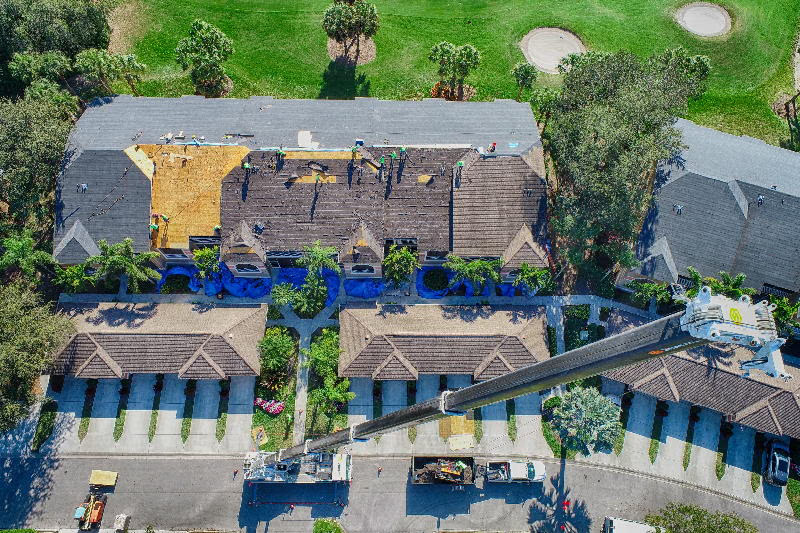
A drone in the air looks simple. The flight that goes wrong is never simple, and on a business job the wrong flight lands on you. Hiring a licensed pilot is not a luxury line item — it is the part of the job that keeps the footage usable and the risk somewhere other than your front door.
Not legal advice
This article is informational and educational. It does not constitute legal advice and does not replace consultation with an attorney, a certified remote pilot, or the FAA. Regulations can change — always verify current rules with the official source before acting.
Key takeaways
- A business flight needs a Part 107 pilot — recreational rules do not cover paid or promotional work.
- A licensed operator carries insurance and logs the flight; a DIY mishap is on your policy.
- You get edited, dated, located deliverables, not a folder of raw clips.
- The real product is accountability: a flight that was legal from takeoff to landing.
The certificate is the floor, not the extra
If the flight is for your company or a client, it is commercial. That requires a Part 107-certified remote pilot. Flying it yourself for fun does not cover a job you are paid for or marketing you publish. The certificate is the entry ticket, and a real operator treats it that way: airspace checked, altitude planned, weather called, insurance in place.
What a DIY flight cannot hand you
Anyone can lift a camera into the air. What a pro delivers is the part you actually use afterward:
- Dated, located imagery. Every shot tied to a date and a spot on the roof, so an adjuster or a board can act on it.
- Edited, ready deliverables. Not fifty raw clips, but the problem pointed to in plain language.
- A logged, insured flight. If something goes sideways, it routes through a policy instead of your personal one.
| What you get | DIY flight | Licensed pilot |
|---|---|---|
| Legal for business use | No | Yes |
| Insurance behind the flight | No | Yes |
| Dated, located deliverables | Raw only | Yes |
| Airspace planned in advance | Maybe | Yes |
Where the Viewer changes the math
A folder of dated photos is useful. The same photos inside the Inspection Viewer are far more useful, because now you click a pin and see the exact defect, or scrub two dates side by side to settle what changed. That is the difference between a record and a dispute-settler.
Every defect, dated and located.
We deliver findings in the Inspection Viewer, so you click a pin and see the exact shingle, not a folder of loose files.
See the Inspection Viewer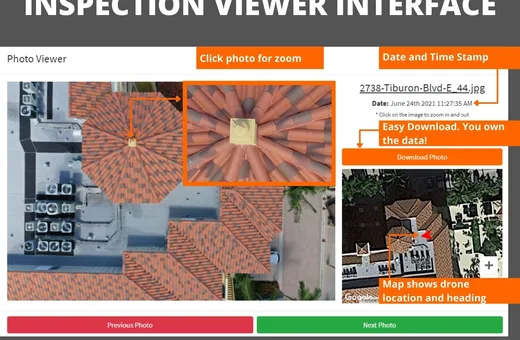
The cheap flight is the expensive one
A lowball operator often skips the certificate, the insurance, or the planning — the three things that protect you. If a flight clips a gutter, loses a link over a school, or breaks a rule near an airport, the cost lands on you. Paying a licensed pilot is paying for the risk to sit with someone else.
Is a licensed pilot really required for a business job?
What happens if a DIY flight damages something?
Do I own the footage if I hire a pro?
Put the risk with a licensed pilot.
Request a quote